Showing posts with label Write On magazine. Show all posts

Monday, 31 January 2022

My interview with YA author Frances Hardinge

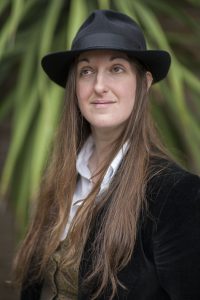
One of the great things about being Deputy Editor of Write On! magazine is the opportunity to interview some incredibly interesting and amazing authors. I had been drawn to the cover of Deeplight by YA author Frances Hardinge and had taken it out of the library to read, enjoying it very much. So when the Editor asked for suggestions of children's authors focusing on wonder I put Frances forward et voila! She became our issue 11 lead interview. 

© David Levenson

Here is the interview for you to read, first published in Write On! magazine.

Magic Hats and Submarines: The Fantastical World of Frances Hardinge

By Claire Buss 

It’s fitting that the theme for Write On! this issue is ‘Wonder’ because it was with awe and wonder I sat waiting for the Zoom call to connect me to Frances Hardinge. I’d seen the beautiful cover artwork for her novel Deeplight and immediately picked it up and read it, thoroughly enjoying the adventure and fantastical world-building. My absolute favourite was the inclusion of a siphonophore-like deep-sea god. I mean, talk about connecting to incredible imagination! So I was thrilled to be greeted with not only the lovely Frances, wearing her trademark hat, but also a fabulous homemade steampunk submarine backdrop. It put my kitchen wall to shame. 

Frances told me the submarine had been a lockdown project as, like me, she’d found it difficult to write then. After admiring the nautical marvel, we launched straight into discussing her beautiful book covers. Frances’s covers are designed by the mysterious ‘H’, a highly talented Romanian designer.  

Naturally, I wanted to know how her writing journey began. Like many writers, she’d initially taken the short story route, submitting to magazines and competitions in her late teens and early twenties, seeing some success. Belonging to a writers’ group really helped her confidence and craft, as she received useful feedback and critique. A fellow member, children’s writer Rhiannon Lassiter, mentioned to Frances that her writing felt very much like it was written for children. 

“I hadn’t actually realised I was writing for children, but as soon as the idea was put into my head, the whole book, Fly By Night, came to life and I started writing with more enthusiasm, experimenting and very much pleasing myself. Putting in things that I found interesting and things that I found funny or exciting.” 

However, like many of us, Frances suffered from galloping imposter syndrome, even after Rhiannon told her the opening chapters were good enough to send to a publisher. 

“I said, 'No, it isn’t. This is just an experiment. This is basically rubbish, but I’m having some fun and I’ll see where it goes and then I’ll bury it in an unmarked grave.'

Luckily, Rhiannon didn’t listen to Frances’s cowardly nonsense, stealing her chapters and putting Frances’s work in front of her editor. Fly By Night was an instant hit and a three-book deal from Macmillan swiftly followed.  

Despite this early and continuing success, Frances says she’s only just starting to believe she might actually be a really good imposter. With every book, she has that same fear and it hits home around the two-thirds mark. It’s a real push to get that final third written and out. That being said, writing for children is definitely a more freeing experience.  

“It’s a better fit for the way I think, to be honest, but also… adult readers want to know what they’re getting in terms of genre and story, whereas younger readers are a lot more open-minded.” 

Having an open-minded audience means Frances is relatively free to mix genres and put mystery, fantasy, horror, thriller and historical elements into one book.  

I ask whether she’s ever experienced any stigma from being, essentially, a fantasy writer. Frances agrees that adult readers often approach fantasy, and indeed Young Adult (YA) with many pre-conceptions. I agree wholeheartedly as she says the readers who love YA are the ones who’ve actually taken the plunge and read them. All you need to do is dip your toe into these wondrously creative waters; if you don’t, you might be missing out on a great read! 

I ask Frances whether she consciously changes her writing approach because she’s writing for children.  

“Younger readers are much more honest. They’re not going to drag themselves through a book for the bragging rights. If it’s boring, they’ll do the much more sensible thing and stop reading it.” 

Frances admits this typical younger audience reaction makes her acutely aware of her own writing faults. Her love of words, metaphors, descriptions and language means she naturally overwrites, so needs to be ‘hit on the nose with a rolled-up newspaper.’ However, she never dumbs her writing down.  

Frances has the utmost respect for her readers. They’re smart kids who can work out meaning from inference and look up any words they don’t understand. Occasionally, she’ll provide an in-depth explanation for more complex concepts. She sees it as writing for a younger version of herself (the 12-to-14-year-old one) and she focuses on the things that interested her then: the creepy and mysterious, the adventure of finding out about new things, as well as exploring the strange and fantastical. 

I want to know more about Frances’s writing style, to see whether she’s a planner or more of a discovery writer, like me. I’m relieved to hear it’s a chaotic process for her and that her daily word count depends on the proximity of her deadline; something I can relate to. That said, Frances declares herself a planner. Once the first nugget of an idea arrives, she researches and brainstorms the setting first, then the characters and then the plot. A rich setting leads to more plot ideas and allows her to add in historical elements. She admits that researching her novels is like falling down a rabbit hole, especially when it comes to her love of history. The research and knowledge adds realism to her writing and allows her to describe things better.  

“Everything can be viewed as rich, strange, funny, mysterious, bizarre and full of endless wonder.” 

Frances says her brain injects wonder into things all the time. For example, if she’s driving somewhere with her partner, he will know where they are, whereas Frances notices the strange cat sitting on the wall and the purple handprint under the bridge.  

The key, she says, is to accept wonder. Adults are expected to have all the answersthey should know how the world works. Yet if you stop asking questions, because you don’t want to look ignorant, then your entire worldview ossifies.  

I have no problem asking questions and we move on to Frances’s workspace. This is usually a laptop on the kitchen table, close to cups of tea, whereas her partner has built himself a mini cubicle in their front room, amidst a terrifying board game collection. My ears prick. Board games, you say? We spend the next ten minutes discussing the merits of role-playing and tabletop games, with an enjoyable digression on LARPing. Frances recommends games that are character-heavy and rule-light for maximum enjoyment.  

Time is against us, but we do spend a few minutes talking about winning the Costa Book Of The Year


Award with The Lie Tree in 2016 and how it became a game-changer.  

“It was nice in a giddy sort of way, but I’m glad it happened with my seventh book and not my debut.” 

The scrutiny and exposure could have been massively destabilising. She spent several weeks in a perpetual state of surprise, feeling helplessly grateful while being convinced the book ranking on Amazon was broken. She credits Macmillan with looking after her and keeping things calm and grounded. Winning the award obviously led to lots more public speaking, including book festivals abroad, interviews for national press and having a photoshoot. The perfect opportunity for me to ask about Frances’s hat. A black fedora. Does it have anything to do with another wondrous, hat-wearing author, Sir Terry Pratchett? It doesn’t. Frances is a habitual hat-wearer, with an impressive collection inspired by a love of black and white spy movies full of adventure, mystery and cool coats with the collars turned up. Although she doesn’t write while wearing her hat – disappointing – she did show me a rather fabulous top hat with a miniature china tea service upon the brim – wondrous!  

We can’t finish our chat without me asking what Frances’s favourite children’s fantasy book is. She tells me it’s The Dark Is Rising by Susan Cooper. A book that had a lasting effect on her world views, full of folklore and atmosphere. 

Every place is subtly magical. We stumble into wonder by accident.” 

Unraveller will be Frances’s next book, out in Autumn 2022, so I ask her for a glimpse of this new story and she tells me it will be another YA novel set in an alternative world, with a mysterious marsh wood, ancient pacts, curses, an erstwhile heron and cannibalistic horses. I know what I’ll be reading this Autumn.  


Frances’ Top Tips When Writing For Children/YA:
 

  • Don’t patronise your audience. YA readers are not stupid.  
  • Rein in self-indulgence.  
  • Write what you enjoy with a subject you care about.  
  • Inject pace.  
  • Write the best book you can with emotional resonance you can feel.  
  • Never lecture. 

 You can find out more about Frances and her books on her website franceshardinge.com  and connect with her on Twitter: @FrancesHardinge  

You can find out more about Claire Buss and her books on her website clairebuss.co.uk, on Twitter, Instagram and TikTok: @Grasshopper2407 

Monday, 26 October 2020

Write On! magazine Issue 6


Guest post from Madeleine White, Editor of Write On!

An exclusive interview with global fantasy icon Ben Aaronovitch sits at the centre of the Write On! Bumper edition, out 28th October in print and online.


We are delighted that Issue Six will see us moving into print again. Based on writing and artwork drawn from Write On! Extra Season Two, it is themed ‘A Kaleidoscope Of Colours’ and forms part of a 48 page ‘Bumper Print Magazine’ that includes issues Four and Five.

Write On! Extra, the online daily digest, was launched in early April. It has been a vehicle that has allowed writers from the local community to share experiences, encouraging other writers to reciprocate with their own. Issue Six draws from the voices that have turned Write On! Extra, our digital daily digest for these unprecedented times, into a must-read for thousands of users from Barking and Dagenham, the UK and 120 other countries across the world.
 
Our new Write On! Extra season starts on 1st November. Themed around ’Hope’, we will continue to publish four features a week. Regulars will be ‘The Showcase’, on Wednesday, ‘Features ‘on Friday and the ‘Interviews’ on Sundays. Additionally, one of ‘Monday Moments’, ‘Tuesday Thoughts’, ‘Thursday Connectors’ and ‘Saturday Spotlight’ will feature on a weekly basis. We are also launching ‘Writer Of The Month’ from November, kicking off with local poet and historical fiction writer Pasty Middleton on 25th of November. 

Published end of January 2021, Write On! Seven will be in its pre-COVID format, with regulars including ‘Spotlight’ and ‘The Big Debate’ returning to their normal spots. It will be the culmination of our ‘Hope’ theme and Mark Haddon – the Whitbread, Dolly Gray Children's Literature, Guardian and Commonwealth Writers Prize – award-winner is featuring as our lead interview and cover star. 
 
We welcome contributions, treasuring new writing and ideas. We also welcome partnership discussions with organisations wishing to contribute, so the voices of their beneficiaries and teams can be heard:
 
If you have something to share, please do get in touch at: pentoprint@lbbd.gov.uk  
To advertise online or in the next issue please see: Our Media Pack
For further details around Write On! Extra, please see: The Editor’s Introduction.
To see our Website: pentoprint.org
 
If you would like to have a discussion around how we might be able to work together, joining organisations such as the Wilbur and niso Smith Foundation,Writers and Artists' Yearbook and Penguin's Write Now, please do get in touch!

Best wishes
Madeleine
 
Madeleine White, Editor
Write On! Magazine
madeleinefwhite@hotmail.com
07904 835188

Tuesday, 21 July 2020

Write On! Magazine - Issue 5 OUT NOW

An exclusive interview with Sunday Times bestselling author Jane Corry sits at the heart of an extraordinary COVID-19 edition of Write On! 5. However, Jane’s is just one of the voices that has contributed experience, strength and hope to the issue. This Special Edition (see it here)  brings together the diverse voices that have created such power through Write On! Extra into a beautifully designed, digital magazine.

Write On! Extra, the online daily digest, was launched in early April. During lockdown, it allowed writers from the local community to share experiences which encouraged other writers to reciprocate with their own. The result: positive engagement with thousands of creatives and writers – many sharing their response to the pandemic in a variety of forms. These included: spoken word, prose, flash fiction, illustrations, cartoons, essays and poetry. It has put Barking and Dagenham at the heart of words and stories flying in from across the UK and 93 countries around the world!

From Sunday 19th to Wednesday 28th July we will be showcasing Write On! Digital Issue 5 by featuring pages from this edition. Then, through the summer and into the autumn, Write On! Extra will continue to explore our evolving ‘new normal’. The new Write On! Extra season officially starts on Wednesday 29th July. The stories and ideas collated will feed into Write On! Issue 6. Themed A Kaleidoscope Of Colours, we explore the shifting landscape we are living through at the moment, looking at how we are adapting to the ever-changing, ever-swirling patterns of life. Government restrictions permitting, we are planning a printed 32-page bumper issue 6 in September, to include issue 5.

Since Write On! Extra launched, thousands of visitors have engaged with our content – so you can be sure your writing and ideas will be read and treasured. We also welcome partnership discussions with organisations wishing to contribute, so the voices of their beneficiaries and teams can be heard.

London Borough of Barking & Dagenham Cabinet Member for Community, Leadership and Engagement Cllr Saima Ashraf shares the following statement of support:

“As Chair of the Pen to Print Advisory Board, it has been an honour to contribute to the work of the programme. BAME and LGBTQ+ writers, and writers from working-class backgrounds, have long been underrepresented in the publishing industry. We established Pen to Print in 2014 to address this; nurturing our local writing talent as a way for the voices of residents in Barking and Dagenham to be heard.”

How To Get Involved:
If you have something to say or share, please do get in touch at pentoprint@lbbd.gov.uk. For further details around Write On! Extra and also submission guidelines, please see the Editor’s Introduction.

For online advertising and partnership opportunities, please see our Media Pack.


Monday, 13 April 2020

Head in the Virtual Cloud


Morning dawns. The streets are quiet, the roads empty. There are no bustling commuters setting out for work. Instead, they are brewing coffee in their dressing-gowns and choosing which end of the sofa to sit on as they spend another day working from home. We are truly working with our heads in The Cloud. And thank goodness for the wonders of modern technology, with remote connection to networks, allowing virtual meetings to continue, workflows to be uninterrupted (with possibly a little too much dedication – I, too, am guilty of sending work emails close to midnight).


When we think of ‘head in the clouds’ we think of the perpetual dreamer, the person who has the fantastical idea but often can’t translate that blue-sky thinking into concrete action. But this imaginative idea of self cannot be how we view our heads any more. Now, more than ever, it can be difficult to separate reality from pixels as we depend increasingly on a virtual reality. The Cloud that we’re currently firmly stuck in is an inter-connected network for work, family and friends. It is an immense support framework that, quite frankly, we would be utterly lost without. If you have a kid under the age of eighteen, I can guarantee you’ve weathered the no-you-cannot-have-screen-time tantrum and if you don’t, then trust me, it’s horrific.

If we consider the typical family for a moment, both parents are now praising their high-speed broadband as they login and try to get through their daily work. Older children sigh at how easily their school has been able to upload lessons for completion, whilst younger kids lean on parental indulgence in touchscreens and educational games online. It was only a few short months ago that screen-addiction, hours of productivity lost to swiping ‘next’ and the rise in game-rage were top news stories. What will the fallout be from allowing excessive digital and virtual consumption in our families? Or will we see a resurgence to the family dinner table, as people crave that companionship and interaction, that desire to have a real conversation and spend some quality family time together?

The energy that we would usually funnel into our work and leisure time has now fired us up to find unique and inspiring solutions for our connectivity problems. Apps like Zoom, Houseparty and Skype have been around for a while but perhaps not all of us were aware of them. In the three weeks since everything shut down, I’ve interviewed a fellow author on Zoom, been recording daily videos for my YouTube channel, I’ve been live on Facebook with my kids as we ventured outside for our allotted exercise and Skype’d my mum. I’ve met with my book club on Google Hangouts. We usually meet in central London and I haven’t been able to make a meeting for months, so I was doubly thrilled to ‘see’ everyone. I’m having weekly team meetings with my fellow Write On! Editors through Microsoft Teams. At first, I didn’t turn on my video feed, feeling too self-conscious, but then I realised how much I appreciated seeing the faces of my colleagues and so now I click ‘video on’ with wild abandon.

I have set up family groups for everyone on WhatsApp. Necessary, as  I have a complicated multiple step-parent on both sides configuration with half-siblings and step-siblings, so having just one group was never going to work. I think this is the most connected we’ve ever been. I haven’t seen my brothers for about eighteen months and next week we’ll be Zooming. I can’t wait!

Another thing I’ve noticed happening, is how everyone is taking full advantage of the extra time they have on their hands. Well, everyone apart from me; my workload seems to have trebled, but I don’t mind. I’ve seen posts from friends and family colouring, styling and cutting their own hair, making complicated recipes and baking their own bread, building complex Lego creations and digging out those dusty board games and puzzles. I myself have begun to learn French with my son, completing daily exercises. The two of us have also been learning how to code and draw shapes on the computer. It’s a small thing, but it’s something I never seemed to have the time for before. Spending those precious moments with him are definitely a huge plus for me during lockdown.

In fact, home-schooling has given me a much-needed distraction from the live news feed on the BBC, the disturbing death toll counter and the danger my keyworker husband faces every time he goes to work. This reliance on virtual support networks seems to me to be a positive result to a frightening situation we’ve found ourselves in, and maybe also a dry run for the next deadly virus that is sure to come our way.

Which brings me on to thinking about what happens next? Will my local café, butchers, greengrocers and bookshop be able to open their doors when the lockdown lifts? Or will their customers have adjusted to virtual life and online shopping without a backwards glance? And what about all the people working from home, proving that they can perform efficiently without being in an office? Should they be made to return to a physical workspace and re-clog the environment with their poisonous commute? Will my book club decide that a virtual meet-up is just easier all round and we’ll never again meet for wine and literature in a London pub? If I’m honest, I’m conflicted myself as to whether I think we should return to our old ‘normal’ or not.

Instead, I cling to the faint hope that the ruling powers in our global economy will see the benefits of how work, shopping and connectivity has changed. That perhaps once people see the positive impact on the planet the reduction in industrial, air and travel pollution has had, they will really think hard on whether we just all go back to the way it was. We must remember what we achieve while our heads are in The Cloud; how we are allowing our creativity and imagination to grow without limits and then bring those experiences with us into the new future we are embarking upon.

Claire is a Pen to Print Alumnus, Deputy Editor at Write On! magazine and an award-winning author. Visit her website clairebuss.co.uk for more information about Claire and her books.

Monday, 30 March 2020

Guest Post: Introducing Write On! Extra

Introducing Write On! Extra: daily posts for unprecedented times

by Madeleine White, Editor, Write On! magazine

Hello, I’m Madeleine and I’m the editor of Write On! magazine, a quarterly magazine published by Pen to Print. When we introduced Write On! nearly a year ago we did so based on the following ideas and ideals:

“Publishing lies at an intersection of entertainment, information and education and is the method by which we record our culture. Our culture is shifting and diverse communities such as the London Borough of Barking and Dagenham, supported by the Arts Council under the Project Banner Pen to Print, are creating structures that ensure everybody can participate. “

Sadly we will not be printing Issue 4 of Write On!, as all the distribution points, including libraries, are shut down. However, you will still be able to flick through the pages online from the 2nd April. Alongside this though, our team of volunteer writers and editors will be working with you, our loyal readers and contributors, to extend the reach of the printed magazine into a daily online digest – Write On! Extra. We are aiming to bring people together to share their experience strength and hope, as well as having a bit of a laugh!

Kick-off is next week (week commencing 30th March) and our initial plans are for Write On! Extra to be a one month pilot. We are hoping to extend this beyond the crisis though. For those of you who had been looking forward to your printed editions, we are aiming to publish a bumper edition in June, comprising issues 4 and 5.

Write On! Extra extends the current weekly offering of showcased creative writing, features and interviews on our website into a comprehensive daily schedule which everyone is invited to participate in, whether as readers or contributors. We are happy to accept video or spoken extracts/ snapshots as well as written pieces.

Monday Memoirs – Stories and experiences from the past to inform our future.

Thoughtful Tuesdays – Thought for the day, mindfulness, inspiration, quotes and spiritual ideas shared to create leadership and hope to see us through the week.

Write On! Showcase – This creative writing showcase will include poetry, short stories, flash fiction and book extracts, all reflecting the weekly theme.

Thursday Connectors – How is your country/community coping with the crisis? Everyone and everywhere has different experiences and different ways of dealing with what is happening. Here we pull these together in one place.

Write On! Features – Essays, opinions and features. In Write On! Extra the subject matter  will be extended beyond the current focus of publishing and writing to include content from different sources that are relevant to our times.

Saturday Spotlight – Books are still being launched at the moment, with many publishers too committed to pull back now. Spotlight will therefore shout out a book launch a week as well as a roundup of releases, with social media activity being used to showcase the post as well as inviting other launch tags.

Write On! Interviews– This section usually features writers, publishers, editors and agents. In Write On! Extra this Sunday profile opportunity will also be extended to council and front-line staff, creative project leads and Arts Council England representatives as well as local organisations.

All will be aligned to a weekly topic. Illustrated below, these month’s themes will be starting from next week (WC 30th March),

From Head in the Clouds to Feet on the Ground – making sense of it all.
We Need You!– coming together for a purpose, how and why.
Then and Now– what is was like, what it is now, how are we going to describe this to our grandchildren when its all over. What are the core lessons that we’ve learned the core values.
Keep Calm and…..?-  what are we learning, how can we use what is happening to renew our way of life in order to grow into a better, stronger community.

Submissions should be no longer than 2000 words and if possible, fit the weekly themes. Please submit any images you have permission to use and that illustrate your work. Write On! Extra will also happy to accept video or audio content. Please also include contact details and any relevant social media IDs, such as Twitter, Instagram or Facebook. Submit via pentoprint@lbbd.gov.uk, adding in the day you are submitting for in the subject line of your Email. Further guidance can be found on the themed pages. All submissions are subject to Pen to Print terms and conditions. 

Our culture is shifting at the moment. The worlds we create do therefore not just serve us. Make a difference to your community from your own four walls and get creating and writing.

We invite local people get in touch. We also welcome partnership discussions for organisations wishing to contribute, so the voices of their beneficiaries and teams can be heard. Details will be published on pentoprint.org.

Monday, 16 December 2019

The Enigma of Success

First published in Write On! magazine, December 2019


This is how the conversation goes:
"So, what do you do, Claire?"
"Oh, I'm a writer."
"Really? Anything I'd have seen?"
"Well… all my books are on Amazon so…"
"Who's your publisher?"
"Actually, I'm self-published."
"Oh, right. So when are you going back to work?"

Because of course, having a publishing deal with a well-known publisher like Penguin Random House or Harper Collins is the definition of success for a writer – isn't it?

What if it's not? What if, I am successful for typing in 'The End' at the close of a 60,000-word manuscript. Google tells me that 97% of writers fail to finish their book therefore if I fall into that top 3% of finishers, surely, I am now a success.

The traditional publishing route dictates that first, you must secure yourself an agent as many publishing houses will not touch unsolicited manuscripts. And so, us happy individuals in the elite 3% must begin touting our stories to agents who receive thousands of submissions a year and are only really interested in current market trends. If you are a BAME author writing about diversity, disability or LGBTQ issues then congratulations, you're a hot bet. You are the lucky 1 in 1000 who will land an agent.

However, these things are never quite that straightforward. I know of two superb Pen to Print authors who have successfully landed an agent, congratulations again, but have yet to receive a publishing deal. So maybe snagging a literary agent is not the full measure of writer success. In an article about the odds of getting a publishing deal that I read recently on Jericho Writers, an editor at one of the big-5 publishing houses in the UK buys less than 1% of the work offered to him. 1%. That's not great odds.

As an independent or indie author, I have now published 14 titles, 2 audiobooks and had short stories published in 4 anthologies. Am I successful simply because of the number of books I published in the last three years? Am I successful because my work was deemed worthy of inclusion in other people's anthologies? Perhaps that is not enough. I am also multi-award winning and can list accolades on my website for which I am very proud but are they a stamp of success? I didn't win the Booker Prize. Yet.
I have not yet managed to earn a significant wage as an author in order to contribute significantly financially to my family yet, am I successful simply because I do earn money from my writing – no matter the amount? According to research carried out by CREATe, the average author take-home wage in 2018 was in the region of £10,000 per annum so even if I were financially successful, we are not talking multi-million-pound deals.

The Oxford English Dictionary states that success is the accomplishment of an aim or purpose.

For a writer who views their authorship as a business and is committed to achieving goals and self-imposed deadlines with the help of quarterly plans and a vast array of spreadsheets, it seems that I have met my success. For me, it is always about what's next. I am constantly aiming to grow and develop as a writer, improve my craft and continue to write and release books that readers want to read.

I firmly believe that if I can just get my novels in front of as many people as possible, I will start to see growth in sales and readers. How can I achieve that goal? Well, that is indeed the magic question and once I figure it out, I'll be sure to let you know.

It's not enough to be successful as a writer, you also need to be successful as a human being. And a parent. And a representative of your ethnic tick box. Perhaps if we just focus on our best in all that we do, success will decode itself. For that in itself is another measure of success. Passing on what you've learnt along your journey and sharing your pitfalls with others, so they don't make the same mistakes. Join online writing groups and share your experiences, ask questions so you can learn from others and pass on the tips you have picked up. If something works for you, tell your writing community and make sure others know they can come to you for help and support. It's a lonely job being a writer but it's a wonderful community being an author.


Claire Buss is a multi-genre author and poet, completely addicted to cake. Find all her books on Amazon. Join the discussion in her Facebook group Buss's Book Stop

Monday, 4 November 2019

Write What You Want, Be Who You Are

(re-published from Write On! magazine with permission)

Ensconced in Howard Linskey’s ridiculously comfortable sofa, I cast an appraising eye over the stack of DVDs, a pre-release copy of his new book Alice Teal is Missing and of course, the wonderfully stuffed bookcase hinting at delicious home cooking, World War II histories and naturally, crime fiction.

I’ve travelled two hours to meet with crime writer Howard Linskey. A recent Achilles tendon break has left him sporting a leg brace. Quite apt really, as our issue theme is all about what needs to be broken to create good writing. I’m here to find out what boundaries he has broken in his writing career to date. So, with his long-haired and incredibly vocal dachshund, Bonnie, joining in when she feels a bit of support is needed, we start our conversation.

I first met Howard in 2016, the inaugural year of the Pen to Print competition. I was an aspiring author and he was one of the judges. Howard’s generosity was immediately apparent as he freely gave advice on what to do once your book has been written, the intricacies of finding an agent and the importance of hanging on for dear life for that book deal.

Since then we’ve crossed paths a few times; I’ve congratulated him on subsequent Penguin book deals, and he’s agreed to be interviewed for my blog. We’ve also met at a number of Pen to Print events and will, from time to time, swap a Tweet or Facebook message. Along with an affable nature and generosity of spirit, it’s this approachable quality that sets Howard apart. 

Am I even an author?
I steer our conversation towards the obstacles Howard has had to overcome in his writing career. As a young lad from the North East of England, a writing career seemed beyond reach. He blames this on the imposter syndrome which dogged him for a long time before his work was read and applauded by the publishing world. And it’s been a long road... For example, despite securing agent Phil Patterson with his historical novel pitch in the early 2000s, getting a publishing deal proved much more elusive. Eventually, Phil suggested Howard try ghostwriting crime novels for Harlequin and he jumped at the opportunity, which led to him finally being published in 2009. He remembers attending the Theakston Old Peculiar Crime Writing Festival in Harrogate with this one book in the bag but still riddled with self-doubt.

Since then Howard’s book, The Drop, was voted as Top 5 Thrillers of the Year by The Times and has been optioned for TV by Harry Potter producer, David Barron. Unsurprisingly, his writing confidence has continued to grow, securing first a three-book then two, two-book deals from Penguin.

Bonnie barks at us from time to time, to remind us to throw her favourite toy – a soft blue whale - and helps to keep me on track with the interview. I could listen to, and be inspired by, Howard’s writing journey all day long but I really want to find out more about his writing habits. We move topics. 

Quality is key
Howard’s first crime novel, Streetwise was penned under the name, Chris Freeman. It was about a Nigerian detective who’d fled his war-torn country to become a cabbie in the Bronx. Harlequin had provided the pre-set topic; one Howard freely admits did not sit in his comfort zone or immediate knowledge base. Despite this, he set to researching everything he possibly could. Even though this wasn’t his story of choice, Howard decided to write the best book he possibly could; his mantra for every subsequent novel.

The first draft of The Drop, book one of his David Blake thriller series, was so highly polished that it was snapped up by independent press, No Exit Press. These days the first draft sent in to his editor might not be quite so polished, but the depth of research remains the same and the quality of writing is still evident. 

“An important thing to bear in mind for writers looking to be picked up,” says Howard, “Even though you may have to change it, it’s crucial you make what you submit as polished as you possibly can. When you’ve built a relationship, the polishing process is a joint one with the editor, but until then you’re on your own.”

So why crime?
Lulled by Howard’s northern accent, Bonnie snoozes on the floor as I ask him why he chose to write crime fiction novels in the first place. His answer is simple; “I wanted to read something that was more film-based, with a grittier underworld.” 

Unencumbered by the rules of writing crime or bogged down by trying to avoid tropes and clichés, he tells me he has continued to write what he wants to write – interesting characters, a good dialogue and conflict for the characters to resolve. 

“A Howard Linskey book is about quality of writing.”

He wants his readers to be certain that they can expect the same workmanship every time they pick up something he has written, no matter what the genre. 

His focus is currently split as he is working on three different projects. He tells me this is proving tough, especially with the highly demanding Bonnie and of course family life with his wife and daughter. Howard feels though, that his somewhat different writing style keeps him on track in terms of his 1000-word daily count. He usually sits down to write after the school run in the week and carves time out on weekends. Avoiding the temptation of social media is also important, as he writes individual scenes rather than sequential prose. Howard begins each book with a pre-determined beginning and ending so that all the clues and foreshadowing can be worked into each mystery as each scene is revealed. As a writer, I was suitably impressed. Howard did confess though, that trying to fit these separate scenes into one cohesive story was an interesting process in itself.

Boxed In or Boxed Out?
Howard has always taken charge of his author identity and writing career. He stopped pursuing the ghostwriting because he didn’t want to be the ‘Nigerian crime guy’. Deciding that three books in the gritty, white-collar, underworld gangster, David Blake series were enough he moved book type again to create a North-East of England crime series, gaining him Penguin as a publisher. To them, of course, he has become that ‘North East crime bloke’. 

Despite his successes, Howard refused to be boxed in. Seventeen years after writing the first draft, Howard went back to his historical fiction novel, Hunting the Hangman, featuring high-ranking German SS official, Reinhard Heydrich. Penguin had first refusal but interestingly enough No Exit Press wanted it and offered him a publishing deal. Hunting the Hangman will also be published in America along with his second WWII novel, Ungentlemanly Warfare. Howard feels that working with multiple publishers allows him to take greater creative risks; meaning he can write what he wants to write. 

Penguin are also revisiting the ‘box’ they assigned to Howard. His latest novel is being published under H. A. Linskey. Howard tells me this is a typical publisher ploy; playing to the supermarkets' love of a debut book and rebranding him in the process. 

Sadly, all conversations must come to an end and while our attempts to get Bonnie up on the sofa for a photo were an abject failure (she posed after we left!), we did have a wonderful conversation. Howard’s single-minded, unshakeable belief in his dream of being an author is something that can inspire us all, it certainly did me!


Connect with Howard on Twitter @HowardLinskey and visit his website www.howardlinskey.co.uk for more details about his books. Ungentlemanly Warfare came out in June 2019 and Alice Teal is Missing comes out in November 2019.

Find out more about Pen to Print and Write On! magazine at www.pentoprint.org.


Claire Buss is a multi-genre author and poet, completely addicted to cake. Find all her books on Amazon. Join the discussion in her Facebook group Buss's Book Stop.